Most non-Arabs who wear the keffiyeh do not intend it to be Anti-Semitic in any way. They wear it as an expression of sympathy for Palestinian civilians, support for human rights, concern about war, or identification with a broader cause of national identity and self-determination. In their minds, it is directed toward Palestinians, not against Jews.
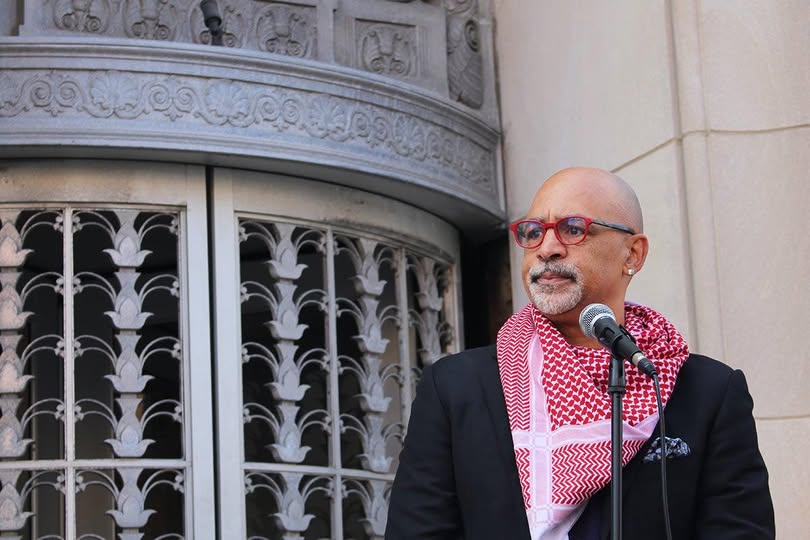
Chris Rabb, Democratic candidate in Pennsylvania’s 3rd Congressional District, is running unopposed in November. Some of his best friends are Jewish..
The keffiyeh itself is also much older than the modern Israeli-Palestinian conflict. It originated as traditional clothing worn throughout the Middle East for practical and cultural reasons. Millions of people wore versions of it long before contemporary political disputes existed. Its roots are cultural, regional, and historical — not anti-Jewish.
There was a time in America when a man could gather with his neighbors, place a pointed hood upon his head, ride silently through the countryside in the dead of night carrying a flaming cross, and not be accused of projecting hostility.
Today, the media and politicians insist upon interpreting every symbolic act in the harshest possible manner. A robe is no longer simply a robe. A hood is no longer simply a hood. A burning cross—once, perhaps, merely an ambitious attempt at outdoor mood lighting—is now subjected to endless negative reinterpretation.
Lost amid these accusations is the fuller story of the Ku Klux Klan, so often maligned by coastal elites. This was first and foremost a fraternal organization that involved entire families. Members of the organization regarded themselves not as villains, but as guardians of order, tradition, and subservience to God.
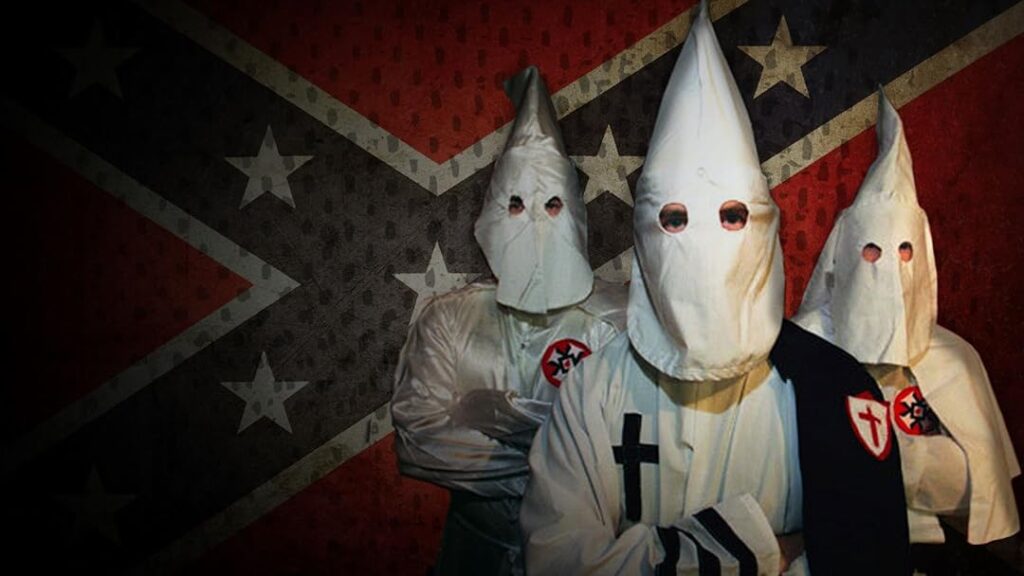
Particularly misunderstood is the mask itself. Modern observers see concealment and intimidation. Actually, the hood was an equalizer: beneath it stood not rich and poor, but only united citizens. Doctors and lawyers wore the same garments as farmers and blacksmiths. Bankers stood shoulder to shoulder with mechanics, all worldly distinctions dissolved beneath identical white cloth and a shared determination to remain unidentified (today we would say they preferred not to be doxxed) while enforcing community standards.
Critics, naturally, focus only on the organization’s less photogenic activities: night rides, threats, beatings, bombings, voter suppression, and the occasional lynching. Supporters counter that this narrow focus ignores the group’s broader contributions to civic life, including parades, church functions, pancake breakfasts, and a robust commitment to cross-burning safety protocols.